Early Years
- Born in 2006 in Ainan, Ehime, Japan.
- Developed an early interest in programming, science, and education.
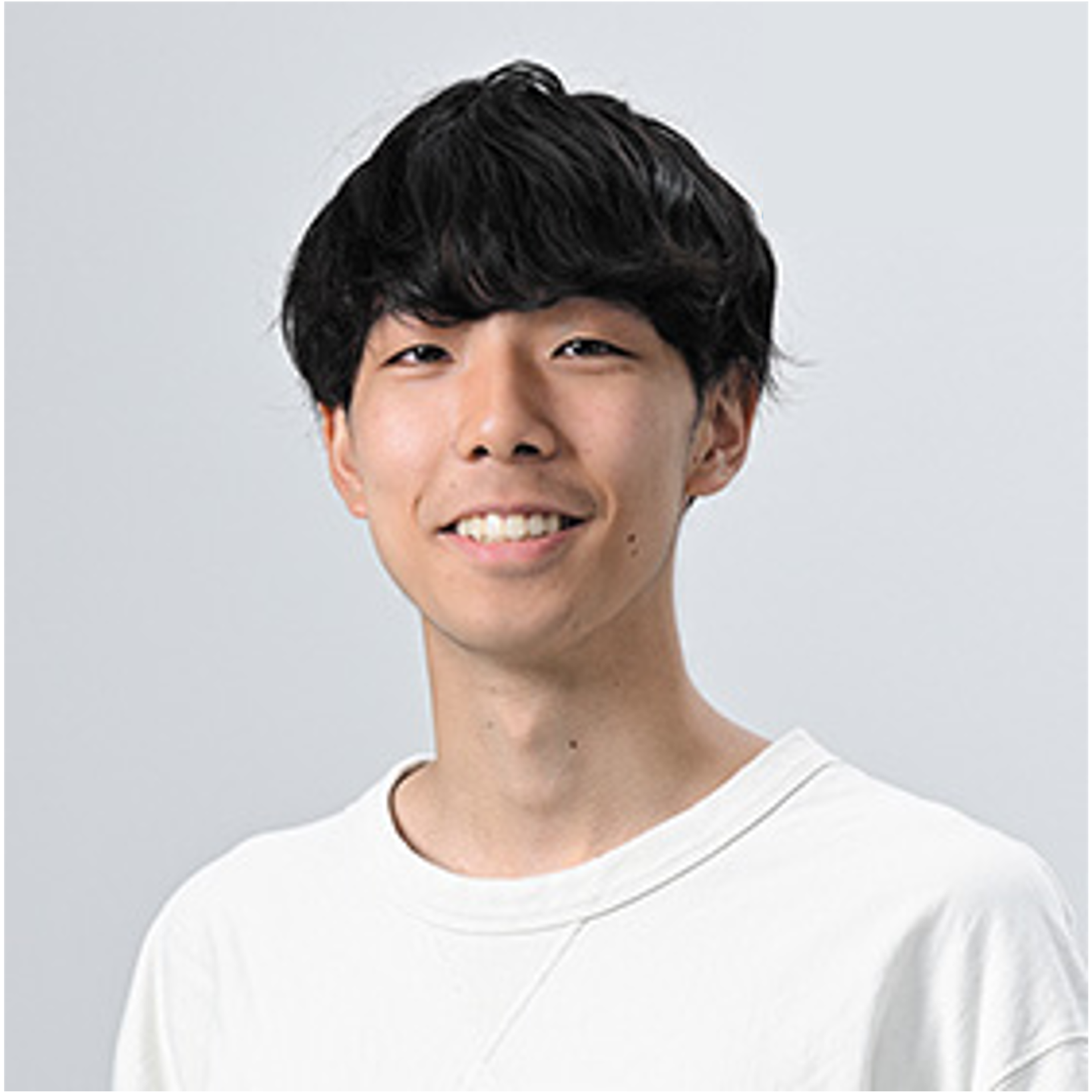
Daichi Sawachika
2nd year, College of Arts & Sciences (Natural Sciences I), The University of Tokyo
Starting in October 2026, Ubunture UTokyo adopts a new mission: "Youth are Our Future."
Until now, the primary focus of our work has been children aged 18 and under. Of course, educating children will remain at the core of what Ubunture UTokyo does. At the same time, looking back on our activities, we realized that what we are trying to create is not only learning for children — it also includes the growth of the young people who engage with children, discover challenges, and work to build the future together with people from different backgrounds.
This realization grew out of our fieldwork in South Africa during the 2025 academic year. Working on the ground, we felt that we, as Japanese alone, could never fully understand the circumstances local children face, and that occasional visits alone have real limits when it comes to sustained engagement. At the same time, we were warmly welcomed by many people at the South African universities we visited. That experience showed us that universities hold real potential as places to understand local challenges, engage with them continuously, and create new value.
So starting in 2026, we are moving forward with a new partnership model: University of Tokyo students and South African university students collaborating as equal partners to address challenges on the ground. Bringing together the on-the-ground perspective of South African students and the academic knowledge of the University of Tokyo, we think through challenges together, learn together, and build solutions together. This is not the one-directional "from Japan to South Africa" model of our past activities — it is international collaboration in which young people from both countries learn, think, and build the future together.
Around these university students are professors, companies, embassies, and public institutions, among others, supporting us from many different positions. With children's learning at the center, university students gather around them, and universities, companies, and public institutions become involved as well. We are now working to build a larger framework for international collaboration that starts from engaging directly with children. This framework does more than change children's educational environment — for the young people who take part, it can also become an opportunity to develop agency and a global perspective, through the experience of working with people of different cultures and values, discovering challenges themselves, and taking action.
As global instability grows and the importance of cross-border collaboration increases, we believe it is essential to rethink our relationship with the Global South beyond a simple framework of "those who support" and "those who are supported." Within that, South Africa is one of the key hubs for economics, education, and research on the African continent.
That is why we believe it is deeply meaningful for university students from Japan and South Africa to face challenges together, learn together, and grow together. And as universities, companies, government, and many others become involved in that process, new collaboration and new value are created. This is precisely why we have adopted the mission "Youth are Our Future."
Of course, our first and unchanging goal remains the growth of children and closing the education gap. To realize that, starting from children's education, we will keep expanding this work into an effort where young people, universities, companies, and government all build the future together. Ubunture UTokyo hopes to be the presence that creates those connections. We will keep leading this work, together with our friends around the world, to create new frameworks and new value.
Representative: Daichi Sawachika
The University of Tokyo, College of Arts & Sciences (Science I) / Representative & Founder, Ubunture UTokyo
Ainan, Ehime—my hometown is a small town embraced by mountains and the sea. With no large library or parks nearby, nature became my playground. My grandfather taught me how to read the seasons, craft tools, and set traps. As I learned by doing, I eventually caught shrimp, fish, and wild plants with my own hands. The river in front of our house and the hills behind it were the best learning spaces. There are many materials in nature but few man‑made tools—so if something doesn’t exist, you make it. That spirit of improvisation, drawing on the wisdom of those who came before, shaped my childhood. Surrounded by friends my age and supported by kind neighbors, I spent truly happy days.
Still, that world sometimes felt narrow. The outline of the town defined the limits of my universe. Then the internet and computers expanded it overnight. A single search led me to unknown places, cutting‑edge research, and fascinating science. Programming especially captivated me—ideas in my head became reality on the screen through code. Digital skills dramatically widened my world.
From a small nursery on the town’s edge to a larger elementary school—and still I wanted more. I chose to leave town on my own and attend junior high in Matsuyama. My world kept expanding. I invited friends on outings, walked, biked, took buses and ferries, and sometimes even swam—beyond prefectural borders to mountains and seas. Every day felt exhilarating. From early on, nothing thrilled me more than touching new worlds.
In high school, I took on various projects by leveraging digital technology.
During those years I visited a family home. A boy there became absorbed in a science book I had brought—his eyes lit up. In that moment I realized learning can bring genuine smiles to anyone. A single book, a single learning experience, can brighten the face of a child with a difficult past. Seeing that, I wanted to pass on the same joy that once expanded my world to many more children.
Resources are limited. My town had no library, and we cannot place all knowledge in all places. That is why I believe technology is what changes the world—and is already changing it. The internet and AI can deliver knowledge to more people and open doors to new worlds. To make education accessible to all, we need innovative technology and the ability to use it well. With that conviction, I entered the University of Tokyo through recommendation admissions to pursue engineering.
At university I broadened my activities: in Noto, I worked with an NPO and student groups to support high‑school students while addressing regional disparities. In a dentsu social‑issue program, I explored diverse fields across academia, technology, environment, history, and sports. I also launched a UTokyo seminar to learn and debate the foundations of education: “Thinking About Inquiry‑Based Learning.”
Around that time, my friend Riko Kasai—later our local coordinator—shared what she had seen in Johannesburg’s schools while studying abroad. Even within the same area, some children could access digital education and rich learning, while others could not. My own research showed structural causes behind these disparities and their serious, long‑term impacts on children’s futures (see “Digital Education Inequality in Johannesburg: An International Comparison” (PDF, Japanese) ).
I felt I had to act. If digital skills changed my life, then I should help deliver their power to the next generation. When I shared this idea, many friends interested in digital education, international cooperation, global affairs, and education joined in. With their support and advice, we launched the student group “Ubunture UTokyo.” As nature once taught me—if the future we want isn’t already here, we can build it ourselves. That spirit is at the heart of our work, as we now prepare for practical activities in South Africa.
Even in the 21st century, wars and conflicts persist—often, I believe, because people don’t truly know each other’s worlds. Knowing is an essential human power—and it is, at heart, enjoyable. Discovering things unlike what we know, meeting people unlike ourselves, is deeply interesting. When hardship makes us retreat into a small personal world, life becomes difficult. That is why I want to deliver the power to broaden one’s world—not just the ability to search on Google or watch TikTok, but the ability to use digital tools with one’s own hands. Giving children that power—both as a life skill and as an intelligence for understanding others—is my life’s goal. This project is the first step toward that dream.
Ubunture UTokyo Representative & Founder: Daichi Sawachika